Wednesday, February 28, 2007
Hand it to the trustees
The word is out that the IU Board of Trustees has selected interim IUB Provost Michael McRobbie as the next president of IU. This is good news for all of us - Provost McRobbie knows the institution and is a strong leader - exactly what we need.

Friday, February 23, 2007
"A" for effort turns out to be a good idea
A friend sent us this the other day:
"This article has rocked my world because the findings it outlines -- for example, that while praising children is good, the key is to focus on praising EFFORT, not intelligence -- have hugely powerful implications for educating children and are completely contrary to conventional wisdom.
Also, be sure to read this part about the self-esteem craze. I've always thought that self-esteem should not be an INPUT, but rather an OUTPUT that comes from genuine achievement, so it's good to see the research backs this up:
"This article has rocked my world because the findings it outlines -- for example, that while praising children is good, the key is to focus on praising EFFORT, not intelligence -- have hugely powerful implications for educating children and are completely contrary to conventional wisdom.
Teachers at the Life Sciences Secondary School in East Harlem, because have seen Dweck’s theories applied to their junior-high students. Last week, Dweck and her protégée, Lisa Blackwell, published a report in the academic journal Child Development about the effect of a semester-long intervention conducted to improve students’ math scores.
Life Sciences is a health-science magnet school with high aspirations but 700 students whose main attributes are being predominantly minority and low achieving. Blackwell split her kids into two groups for an eight-session workshop. The control group was taught study skills, and the others got study skills and a special module on how intelligence is not innate. These students took turns reading aloud an essay on how the brain grows new neurons when challenged. They saw slides of the brain and acted out skits.
“Even as I was teaching these ideas,” Blackwell noted, “I would hear the students joking, calling one another ‘dummy’ or ‘stupid.’ ” After the module was concluded, Blackwell tracked her students’ grades to see if it had any effect.
It didn’t take long. The teachers—who hadn’t known which students had been assigned to which workshop—could pick out the students who had been taught that intelligence can be developed. They improved their study habits and grades. In a single semester, Blackwell reversed the students’ longtime trend of decreasing math grades.
The only difference between the control group and the test group were two lessons, a total of 50 minutes spent teaching not math but a single idea: that the brain is a muscle. Giving it a harder workout makes you smarter. That alone improved their math scores.
Also, be sure to read this part about the self-esteem craze. I've always thought that self-esteem should not be an INPUT, but rather an OUTPUT that comes from genuine achievement, so it's good to see the research backs this up:
Since the 1969 publication of The Psychology of Self-Esteem, in which Nathaniel Branden opined that self-esteem was the single most important facet of a person, the belief that one must do whatever he can to achieve positive self-esteem has become a movement with broad societal effects. Anything potentially damaging to kids’ self-esteem was axed. Competitions were frowned upon. Soccer coaches stopped counting goals and handed out trophies to everyone. Teachers threw out their red pencils. Criticism was replaced with ubiquitous, even undeserved, praise. Dweck and Blackwell’s work is part of a larger academic challenge to one of the self-esteem movement’s key tenets: that praise, self-esteem, and performance rise and fall together. From 1970 to 2000, there were over 15,000 scholarly articles written on self-esteem and its relationship to everything—from sex to career advancement. But results were often contradictory or inconclusive. So in 2003 the Association for Psychological Science asked Dr. Roy Baumeister, then a leading proponent of self-esteem, to review this literature. His team concluded that self-esteem was polluted with flawed science. Only 200 of those 15,000 studies met their rigorous standards.
After reviewing those 200 studies, Baumeister concluded that having high self-esteem didn’t improve grades or career achievement. It didn’t even reduce alcohol usage. And it especially did not lower violence of any sort. (Highly aggressive,
violent people happen to think very highly of themselves, debunking the theory that people are aggressive to make up for low self-esteem.) At the time, Baumeister was quoted as saying that his findings were “the biggest disappointment of my career.”
Now he’s on Dweck’s side of the argument, and his work is going in a similar direction: He will soon publish an article showing that for college students on the verge of failing in class, esteem-building praise causes their grades to sink further. Baumeister has come to believe the continued appeal of self-esteem is largely tied to parents’ pride in their children’s achievements: It’s so strong that “when they praise their kids, it’s not that far from praising themselves.”
By and large, the literature on praise shows that it can be effective—a positive, motivating force. In one study, University of Notre Dame researchers tested praise’s efficacy on a losing college hockey team. The experiment worked: The team got into the playoffs. But all praise is not equal—and, as Dweck demonstrated, the effects of praise can vary significantly depending on the praise given. To be effective, researchers have found, praise needs to be specific. (The hockey players were specifically complimented on the number of times they checked an opponent.)
Sincerity of praise is also crucial. Just as we can sniff out the true meaning of a backhanded compliment or a disingenuous apology, children, too, scrutinize praise for hidden agendas. Only young children—under the age of 7—take praise at face value: Older children are just as suspicious of it as adults.
Psychologist Wulf-Uwe Meyer, a pioneer in the field, conducted a series of studies where children watched other students receive praise. According to Meyer’s findings, by the age of 12, children believe that earning praise from a teacher is not a sign you did well—it’s actually a sign you lack ability and the teacher thinks you need extra encouragement. And teens, Meyer found, discounted praise to such an extent that they believed it’s a teacher’s criticism—not praise at all—that really conveys a positive belief in a student’s aptitude.
In the opinion of cognitive scientist Daniel T. Willingham, a teacher who praises a child may be unwittingly sending the message that the student reached the limit of his innate ability, while a teacher who criticizes a pupil conveys the message that he can improve his performance even further.
Wednesday, February 14, 2007
Weather 1; IU 0
Wow. IU is closed for the morning. Over the past 36 hours we've had rain, then sleet, followed by ice and then snow. Good call to close campus!
Tuesday, February 13, 2007
Ice, ice, baby

It takes an awful lot to close down IU, and today's ice storm didn't quite do it. Local schools and so forth are closed, the roads are not so much roads as wide sheets of ice, and power lines around town are snapping (or are being brought down by falling tree limbs), so right now 6,000 people are without power.
Our friends to the north have it worse, however. West Lafayette is under a snow emergency, and Purdue actually shut down for 24 hours. The IU-Purdue game, set for tomorrow night, might be postponed.
Time to stay indoors, put your feet up, and have some hot soup!
Wednesday, February 07, 2007
Who are they gonna call?

The IU presidential search committee has done its work and has turned over its recommendations to the Trustees. We have our guesses as to who will make the short list... and we certainly hope to see at least one internal candidate on the list in particular. So here are our questions for you: How important is the IU president to the institution? To the students? To the state? To you?
Monday, January 29, 2007
Why we love IU students
They take their responsibility to serve society very seriously. And they keep in touch.
Wednesday, January 24, 2007
Wade Steffey is missing

Wade, 19, is a Purdue student and a native of Bloomington. He was last seen in West Lafayette on January 13. Please help spread the word!
Thursday, January 18, 2007
Who's yer Hoosier?
Take a number and get in line. Applications to IU are wa-a-a-a-a-a-ay up this year.
Tuesday, January 09, 2007
New Year, new semester
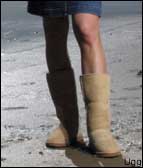
Same old issues dogging the campus. The trustees are interviewing candidates to replace IU President Herbert. Sorority rush is over, and by the way we think sororities are a great influence on campus and a wonderful opportunity for young women. The warm weather that blew in with El Nino seems to be over and we in Bloomington are feeling Mother Nature's full wintry blast. But here's good news:
warm fuzzy boots have replaced flip flops as the fashion statement of choice this year, so students don't look like they are suffering nearly as much as in previous years.
Thursday, December 21, 2006
Caveat borrower
We have three rules for our children, should they decide to take a year or two off from their studies:
All well and good, and the rules could just as well apply to students in college as well, we think. Which explains why we are not particularly happy about the news that the College Board is in the business of private loans for college students. Crippling debt is one of the most intractable problems that bedevils those of us who really care about students; private loans typically have higher interest rates and less forgiving payoff schedules than Federal loans. The College Board does not belong in this business.
- Don't get arrested.
- Don't procreate.
- Don't get into debt.
All well and good, and the rules could just as well apply to students in college as well, we think. Which explains why we are not particularly happy about the news that the College Board is in the business of private loans for college students. Crippling debt is one of the most intractable problems that bedevils those of us who really care about students; private loans typically have higher interest rates and less forgiving payoff schedules than Federal loans. The College Board does not belong in this business.
Sunday, December 17, 2006
Friday, December 15, 2006
Worth a gamble?

Props to Governor Daniels for trying to come up with ways to support higher education in the state of Indiana. However, we are reminded that our sister calls state lotteries "a tax on the stupid." Ironic then, we suppose, that the monies generated would be used to support the smart. What do you think? Has the governor gone too far with privatization? Wasn't the money supposed to go to education anyway? Shoudl the state be in the business of promoting a potentially devastating, addictive activity like gambling? If not, have you got a better idea for funding higher education?
Thursday, December 14, 2006
Silent nights...

Shhhhh... it is finals week for IU students, and the place is really starting to quiet down. Traffic is thinning out, and it is easier to park downtown. Next week, the students will mostly be gone except those few who live too far from home to travel for the holidays, especially students from abroad who have enough trouble getting a visa to attend IU in the first place. We're going to feed some of them at least one holiday dinner; on Monday night at the Herman B Wells Library, we fed 1,200 of them a free and healthy snack, and wished them best of luck on their exams.
Blue, blue, their world is blue
Our kids call the winter solstice holiday "Christma-Hanu-Kwanzaa," declining to differentiate between the annual getting of the presents. But apparently lots of people - especially male people - can't see any difference either. Interesting!
Monday, December 11, 2006
More on financial aid
This is huge. For students who get Pell grants, IU is going to cover the rest of the costs of tuition and fees, leaving only books, supplies and living expenses. Read the whole thing here. Of course, living expenses are a large part of the cost of attending college, but smart students can find lots of ways to keep those costs down as well.
Wednesday, December 06, 2006
Monday, December 04, 2006
Race and education
and everything else... For some well-written and thoughtful commentary from a different perspective, we recommend this blog.
Thursday, November 30, 2006
Objective: Remove filler from resumes...
Here is a link to a fascinating discussion about job applicant resumes, started by blogger and law professor Eugene Volokh.
If law firms can reasonably require single-page resumes from second-year law students, we think the same is possible for students in their last year of high school.
Some choice remarks from the discussion:
If law firms can reasonably require single-page resumes from second-year law students, we think the same is possible for students in their last year of high school.
Some choice remarks from the discussion:
- College students also get a lot of screwy advice. I was pretty much ordered to include an "Objective" on my resume, and I still don't know what good it's supposed to do. At least the keywords list will help with scanned resumes... but who even reads the objective, anyway?
- I've found the same rule applies to people who say they are "quick learners", or that they have "good interpersonal skills" or "good math skills" or "knowledge of Excel." (I work in quantitative finance, and I'm currently trying to hire a C++ programmer, so, I'm seeing a lot of these). If they say that, then no, they aren't. The people who really know something don't bother to put such vague or low-level skills. The people who say they have "good math skills" usually got a B in their one calculus class 10 years ago. The people who are actually good might list a published paper or a couple courses in real analysis, but if asked they will say they are dissatisfied with their math skills.
- A 2L going through on-campus recruiting at a top school with a multi-page resume is going to look like an idiot.
We're not sayin'... we just sayin'.
Wednesday, November 29, 2006
News of the day

In our opinion, it was a case of either they had to charge him with a crime or give him a medal. The IU student who pointed out an airline security loophole isn't going to get into any trouble. Let's hope the FBI offers him a job!
Tuesday, November 28, 2006
We're back
 We've been remiss lately, but really it's because the weather has been so unseasonably glorious around here. Thanksgiving Day in Bloomington, and the temperature was in the mid-60's...
However, goodbye to all that. They say the weather is going to turn nasty and cold, and just in time for the end of the semester too. Probably better for keeping the students indoors and focussed on their studies. Check with your student - this is the time of year when lots of them run low on meal points. Remind them that the first night of finals week (Monday, Dec. 11) there will be free food in the Herman B Wells Library, courtesy of the College of Arts and Sciences. 10 p.m. - be there.
Subscribe to:
Posts (Atom)